
WELCOME BONUS 300%
UP TO €2000 + 100
FREE SPINS
UP TO €2000 + 100
FREE SPINS
Home → Blackjack
Blackjack at Ice Casino: Variants, Rules and Payouts
When does the table max bet apply?
Infinite Blackjack at Evolution imposes a strict maximum wager of 5,000 EUR per hand, which sets the absolute ceiling for single-round exposure during live sessions. This high limit accommodates professional players seeking substantial returns, yet it also amplifies potential losses significantly compared to lower-stakes variants available on the platform. Consequently, bankroll management becomes critical when approaching this upper threshold to avoid rapid depletion of funds during high-variance periods.
Lightning Blackjack from Evolution features a lower maximum stake of 2,500 EUR, effectively halving the risk profile compared to the Infinite variant while still allowing for significant multipliers up to 25x on winning hands. Players must adjust their betting strategies accordingly, as the reduced cap limits the absolute profit potential per spin despite the presence of lightning modifiers. This constraint ensures that even with favorable outcomes, total payouts remain within manageable bounds for both the operator and the participant.
Quantum Blackjack Plus Live by Playtech matches the highest limit of 5,000 EUR but introduces unique Quantum Multipliers reaching up to 1,000x on specific three-card combinations totaling 21 points. Such extreme payout potential requires careful consideration of the house edge, which sits at 99.57% RTP under optimal strategy, demanding precise decision-making to maximize value. The combination of high stakes and massive multipliers creates a volatile environment where standard betting patterns may yield unpredictable results over short sessions.
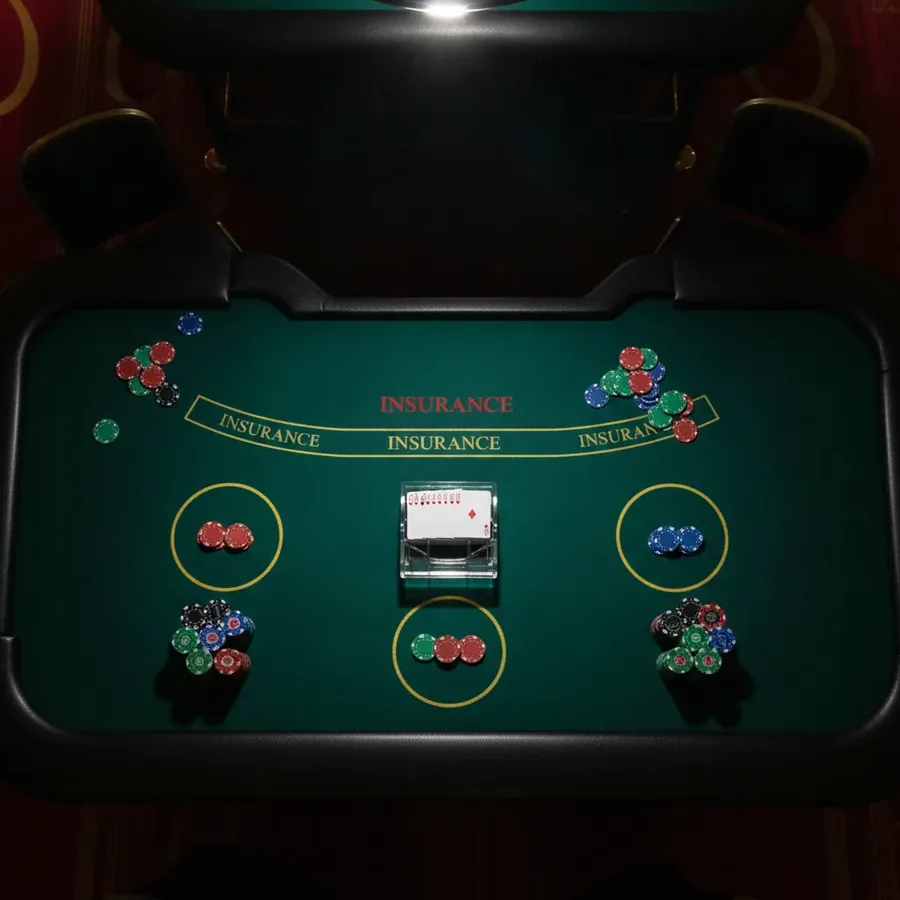
How much time is left for the decision?
Standard blackjack rules typically grant players ten seconds to make decisions such as hitting, standing, or splitting, though exact timings can vary slightly between different live dealer studios like Evolution or Playtech. This brief window necessitates quick recognition of optimal moves based on basic strategy charts, especially when dealing with complex scenarios involving soft hands or insurance bets. Failure to act within this timeframe usually results in an automatic stand, potentially leading to suboptimal outcomes against the dealer's final hand.
Insurance wagers require immediate attention before the dealer checks for blackjack, often demanding split-second decisions if the dealer shows an Ace, with payouts set at 2:1 for successful predictions. Since insurance has a high house edge of 7.47%, basic strategy generally advises rejecting this side bet unless counting cards reveals a true count of +3 or higher. Delaying this choice beyond the initial deal phase is impossible, making prior knowledge of card distribution crucial for long-term profitability in these specific moments.
Side bets like Any Pair, 21+3, Hot 3, and Bust It in Infinite Blackjack operate independently of main game timing but must be placed before the first card is dealt, locking in the wager permanently. These auxiliary options add layers of complexity to the decision matrix, requiring players to evaluate additional probabilities alongside standard blackjack strategy without extending the primary action window. Understanding these parallel betting structures helps manage expectations regarding return rates, as they carry distinct risks separate from the core 99.47% RTP of the main game.
What doesn't count towards turnover at 10 percent?
Table games including all blackjack variants contribute only 10 percent toward the wagering requirement for the 300% welcome bonus up to €2,000, meaning every hundred euros wagered reduces the obligation by just ten euros. This low contribution rate significantly extends the time needed to clear bonuses through live dealer interactions compared to slots, which offer full 100 percent credit per euro spent. Players relying heavily on blackjack must therefore place substantially larger volumes to meet the same turnover targets achievable more quickly via slot machines.
Specific rules like Late Surrender improve RTP by approximately 0.08 percentage points but do not alter the fundamental 10 percent contribution status assigned to all table game activities under bonus terms. Even liberal versions offering S17, DAS, and Resplit features remain subject to this restrictive classification, limiting their utility for efficient bonus conversion despite their superior mathematical advantages. Strategic play optimizing these rules enhances win probability but cannot bypass the structural penalty imposed by the casino's bonus contribution hierarchy.
Insurance bets, paying 2:1 but carrying a 7.47% house edge, are categorized under the broader table game umbrella and thus inherit the same 10 percent turnover weighting regardless of their independent nature. Wagering on these side options consumes bonus funds at the accelerated pace dictated by the main game category, reducing the effective bankroll available for primary gameplay. Consequently, avoiding insurance unless strictly necessary preserves capital efficiency while navigating the stringent requirements associated with clearing the initial deposit match.
Step-by-step Split at the Live Table
Splitting pairs allows players to divide identical cards into two separate hands, doubling the initial stake while offering opportunities to capitalize on favorable deck compositions in games like Liberal Vegas Strip. This mechanic is particularly potent when handling Aces or eights, as resplitting capabilities can further expand playing options across multiple rounds until each hand reaches its natural conclusion. Proper execution requires understanding how split limitations interact with overall table rules to maximize expected value without exceeding practical constraints.
Resplitting Aces typically permits only one additional card per newly created hand, restricting subsequent actions and limiting the strategic depth compared to other pair types that might allow unlimited splits. This restriction prevents infinite expansion of hands while maintaining balance between player advantage and house edge, ensuring that even optimal splitting strategies cannot indefinitely exploit favorable conditions. Players must recognize these boundaries to avoid overestimating the flexibility of split mechanics during high-pressure live dealer sessions.
Double After Split (DAS) enhances the value of split hands by permitting additional doubling on any two-card total formed after the initial division, improving RTP by approximately 0.14 percentage points. This rule significantly boosts profitability when paired with liberal settings like S17 and Late Surrender, creating a synergistic effect that lowers the overall house advantage to 0.28%. Utilizing DAS effectively requires recognizing when doubled hands hold strong equity, thereby maximizing returns during extended sequences of favorable outcomes.
Check table limit before the first bet
Verifying minimum and maximum stakes prevents accidental rejection of wagers, as Infinite Blackjack accepts entries from 1 EUR up to 5,000 EUR, providing broad accessibility for varied bankroll sizes. This range ensures that casual players can engage comfortably while professionals maintain access to high-limit environments suitable for aggressive progression systems or large-volume testing. Ignoring these boundaries risks wasted time and potential frustration when attempts to bet outside acceptable parameters fail due to rigid system enforcement protocols.
Lightning Blackjack operates within a narrower band of 1 EUR to 2,500 EUR, reflecting its focus on multiplier-driven excitement rather than pure volume betting, which influences strategic approaches differently. Players accustomed to higher limits must recalibrate expectations regarding potential single-hand profits, as the cap restricts maximum exposure even during exceptional winning streaks enhanced by lightning modifiers. Awareness of this distinction helps align betting behavior with realistic outcome projections derived from the game's specific mathematical structure.
Quantum Blackjack Plus Live mirrors the top-tier limit of 5,000 EUR but distinguishes itself through Quantum Multipliers up to 1,000x on three-card twenty-one combinations, altering risk-reward dynamics substantially. Such extreme payout potentials demand heightened vigilance regarding bet sizing, as losing streaks can deplete balances rapidly if stakes exceed sustainable levels relative to variance tolerance. Confirming alignment between personal financial limits and table constraints ensures responsible engagement while preserving the ability to capitalize on rare high-multiplier events.
Blackjack variants at a glance
| Variant | Payout | House edge | Rule | Bet range |
|---|---|---|---|---|
| Blackjack Split / Double / H17 – Regel-Effekte | n.a. (Regel-Modifikatoren) | H17 +0.22 Prozentpunkte; RSA −0.08 Prozentpunkte; DAS −0.14 Prozentpunkte | Dealer Hits Soft 17 verschlechtert RTP um 0.22 Prozentpunkte; Resplit Aces verbessert um 0.08 Prozentpunkte; Double After Split verbessert um ca. 0.14 Prozentpunkte; 6 Decks statt 8 – ca. 0.02 Prozentpunkte. | Double – Einsatz ×2 mit einer Karte; Split – bis 4 Hände; Ass-Split meist mit einer Karte. |
| Blackjack Surrender (Late Surrender) – Regel-Effekt | n.a. (Regel-Modifikator) | −0.08 Prozentpunkte | Spieler gibt Hand nach Dealer-Blackjack-Prüfung auf, verliert die Hälfte des Einsatzes. Verbessert RTP um ca. 0.08 Prozentpunkte. Early Surrender ist wesentlich wertvoller (bis −0.6 Prozentpunkte), aber extrem selten. | Rückzahlung 50% des Einsatzes |
| Blackjack Insurance / Versicherung (6–8 Decks) | 92.53% | 7.47% | Separate Nebenwette bis 50% der Hauptwette, wenn der Dealer ein Ass hat. Basisstrategie schreibt IMMER Ablehnung vor (außer Karten zählen bei True Count ≥ +3). Bei einem Deck Vorteil ≈ 5.88% | Insurance 2:1 |
| Blackjack 6 Decks, S17, DAS, DOA, Auszahlung 3:2, Basisstrategie | 99.54% | 0.46% | Dealer steht auf Soft 17; Verdopplung auf jeder Zweierkarte; Verdopplung nach Split erlaubt; keine Aufgabe. Basisstrategie ist für diesen Wert zwingend | Blackjack 3:2, normaler Gewinn 1:1, Insurance 2:1 |
| Blackjack Ein Deck, klassische Regeln, 3:2 | 99.85% | 0.15% | Weniger Decks = niedrigerer Vorteil; ein Deck gibt ca. −0.48 Prozentpunkte gegenüber 8 Decks. Oft durch 6:5 Auszahlung kompensiert. | Blackjack 3:2, Gewinn 1:1 |
| Blackjack Liberal Vegas Strip (liberale Regeln, 3:2) | 99.72% | 0.28% | Günstigste Regelkombination: S17 + DAS + Resplit + Late Surrender. Standardabweichung 1,15 | Blackjack 3:2, Gewinn 1:1 |
Ace Split: only one card per hand
The rule for splitting Aces restricts the player to receiving exactly one additional card on each new hand. This limitation prevents players from building strong totals like 20 or 21 through multiple hits, which significantly alters the expected value of the split. Consequently, the potential profit from this move is capped compared to standard split rules that allow further drawing.
This restriction applies specifically to the Blackjack Ein Deck variant with classical rules and a 3:2 payout structure. While the single deck offers a low house edge of 0.15%, the one-card limit reduces the strategic advantage of splitting. Players must accept that an Ace split will almost always result in a total of 11 or less.
The consequence for the reader is a reduced opportunity to maximize returns during favorable dealer upcards. Since the dealer stands on Soft 17 in most variants, the player cannot improve a split Ace beyond the initial hit. This rule effectively neutralizes the high variance usually associated with splitting Aces.
Split, Double Down, and Surrender in Numbers
Resplitting Aces improves the Return to Player by 0.08 percentage points, while doubling after split adds approximately 0.14 percentage points. These specific rule modifiers directly lower the house edge in the 6-deck variant where these options are permitted. The combination of DAS and Resplit Aces creates a more player-friendly environment than restrictive tables.
Late Surrender provides a further reduction in the house edge by 0.08 percentage points by allowing players to forfeit half their bet. This option is available in the Liberal Vegas Strip variant, which also features Dealer Stands on Soft 17. The cumulative effect of these liberal rules results in a base house edge of just 0.28%.
In contrast, the Infinite Blackjack Live table operates under different constraints with a house edge of 0.53% (derived from 99.47% RTP). It lacks surrender options but allows unlimited players at the table. The absence of late surrender means players retain full risk on every hand dealt.
Splitting costs double bet: plan budget
When a player chooses to split a pair, the original wager must be matched immediately to create two separate hands. For example, a 10 EUR bet becomes 20 EUR total exposure across the two new hands. This immediate doubling of the stake requires careful bankroll management before the cards are even dealt.
The Lightning Blackjack table caps individual bets between 1 and 2,500 EUR, meaning a split can reach 5,000 EUR in total action. High rollers utilizing this feature must ensure their balance covers the doubled requirement without depleting funds prematurely. The maximum stake limit applies per hand, not per round.
Quantum Blackjack Plus Live allows stakes up to 5,000 EUR per hand, potentially requiring 10,000 EUR for a single split decision. This extreme upper limit demands significant liquidity from the player to sustain volatility. Budget planning must account for these peak exposure moments during high-stakes sessions.
Splitting tens costs expected value: better stand
Splitting a pair of tens breaks up a strong 20-point total into two weaker starting hands of 10 each. Statistically, holding 20 yields a higher expected value than playing two hands starting with 10 against any dealer upcard. The loss of this guaranteed strong position reduces long-term profitability.
The Liberal Vegas Strip variant offers the lowest house edge of 0.28%, making optimal strategy crucial for maintaining this advantage. Deviating from basic strategy by splitting tens increases the house edge significantly above this baseline. Players relying on this variant should strictly avoid splitting ten-value cards.
Even in the single-deck game with a 0.15% house edge, splitting tens remains a negative expectation play. The 3:2 payout for blackjack does not compensate for the frequent losses incurred by weakening the hand. Consistent adherence to standing on tens preserves the theoretical return rate.
Even Money only possible with Dealer Ace
Even Money is a side offer available when the player has a natural blackjack and the dealer shows an Ace. This option guarantees a 1:1 payout immediately, eliminating the risk of the dealer also having blackjack. It functions as an insurance policy on the primary win, locking in the profit regardless of the hole card.
The Insurance bet itself pays 2:1 but carries a high house edge of 7.47% in multi-deck games. Taking Even Money is mathematically equivalent to accepting Insurance when the probability of a dealer blackjack is 1 in 3. For players following basic strategy, declining both is the superior mathematical choice.
In the single-deck variant, the probability of the dealer having a ten-value hole card is slightly lower, reducing the insurance edge to approximately 5.88%. However, the principle remains that Even Money favors the casino over the long run. Analytical players should reject this offer to maintain the highest possible RTP.
Splitting Eights vs Standing on 16
The Blackjack Liberal Vegas Strip variant features a strict house edge of only 0.28 percent against the player. This favorable statistical outcome relies entirely on the S17 rule where the dealer stands on Soft 17, combined with DAS and Resplit permissions. Correct execution of splitting eights versus standing on hard 16 is essential to maintain this low margin over hundreds of thousands of hands.
In contrast, a standard six-deck game with S17, DAS, DOA, and no surrender offers a higher house edge of 0.46 percent. The additional 0.18 percentage points represent the cost of missing the late surrender option in the base ruleset. Players must adhere strictly to basic strategy charts to minimize losses within this specific mathematical framework.
Deviation from optimal play, such as hitting a soft 17 hand, increases the casino advantage by exactly 0.22 percentage points per occurrence. This penalty applies regardless of whether the game uses three or eight decks, though fewer decks generally lower the baseline edge. Consistent adherence to split protocols preserves the theoretical return rate defined by the table parameters.
Register Late Surrender correctly in three steps
The first requirement involves selecting a table that explicitly lists the Late Surrender rule in its configuration menu. Only variants like the Liberal Vegas Strip allow this move after the dealer checks for blackjack, protecting half the wager. Early surrender options are significantly more valuable but remain extremely rare in modern digital environments.
The second step demands recognizing when the dealer shows an Ace or a ten-value card as the upcard. In these high-risk scenarios, forfeiting 50 percent of the original stake prevents a total loss of the unit. This tactical retreat improves the overall RTP by approximately 0.08 percentage points compared to playing out the hand.
The final action requires executing the surrender button before any other moves like hitting or doubling become available. This restriction ensures the rule functions as a modifier rather than a primary strategy tool. Players who ignore this timing window lose the mathematical benefit associated with the surrender mechanic entirely.
Bonus Lost Due to 10 Percent Contribution
Table games contribute only 10 percent toward the fulfillment of the 300% welcome bonus wagering requirements at Ice Casino. This low contribution rate drastically inflates the actual turnover needed to clear the promotional funds attached to the account. A €100 bet generates merely €10 of progress toward the mandatory playthrough threshold.
Conversely, slot machines contribute 100 percent to the same bonus turnover calculation, offering a direct one-to-one ratio. Players focusing exclusively on blackjack variants face a tenfold increase in required volume compared to slot players. This discrepancy forces a strategic choice between game preference and bonus efficiency during the clearance period.
The maximum bonus value caps at €2,000, which translates to a massive €4,000 wagering obligation if played via slots. However, playing solely through live tables would require €40,000 in total bets to achieve the same clearance status. Such extreme volume requirements typically result in the forfeiture of the bonus balance due to variance exposure.
What a Natural Blackjack Practically Pays Out
The Liberal Vegas Strip variant pays natural blackjacks at a standard 3:2 ratio, rewarding a €100 bet with €150 in profit. This generous payout structure contributes to the variant's superior 99.72 percent RTP figure among comparable games. Maintaining this ratio is critical for preserving the low 0.28 percent house edge advertised by the provider.
Games offering 6:5 payouts instead of 3:2 reduce the return on a €100 winning hand to just €120. This alteration adds exactly 1.39 percentage points to the house edge, making it the single most detrimental rule change available. The resulting RTP drops to 98.15 percent, significantly eroding long-term player profitability across all sessions.
Side bets like Insurance pay 2:1 but carry a steep house edge of 7.47 percent in six-to-eight deck shoes. Basic strategy dictates always rejecting this offer unless counting cards reveals a true count of plus three or higher. Relying on insurance payouts without card counting expertise accelerates bankroll depletion through negative expected value.
Bonus conditions often exclude Blackjack completely
While some platforms restrict table games entirely, others like Ice Casino permit them but impose severe contribution penalties. The 10 percent wagering contribution for blackjack effectively acts as a functional exclusion for bonus hunters seeking quick clearance. Players must weigh the low house edge against the impractical turnover demands imposed by the promotion terms.
Live dealer tables such as Infinite Blackjack offer unlimited seats and multipliers up to 25x on winning hands. Despite these attractive features, the 10 percent contribution rate remains identical to standard digital variants. This uniform restriction prevents players from utilizing high-limit live tables to efficiently clear the €2,000 bonus cap.
The Quantum Blackjack Plus variant provides multipliers up to 1,000x on three-card combinations for high rollers betting up to €5,000. These massive potential wins are subject to the same restrictive bonus terms governing all other table games. Consequently, the volatility benefits of live quantum mechanics are neutralized by the prohibitive wagering requirements attached to the deposit match.
Contact
Live - online chat
Banking





Providers








Ice Casino 2026